Bauchi State Needs ₦488 Million to Eliminate Neglected Tropical Diseases
By Uzairu Dauda Bunga:
The Federal Ministry of Health has called on the public to take proactive measures in combating Neglected Tropical Diseases (NTDs) across communities in Nigeria.
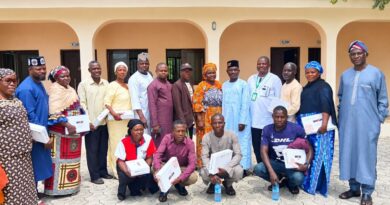
The call was made by the Federal Ministry of Health’s NTDs Coordinating Officer, Incharge of North-East, Hajiya Hauwa Abubakar, during a media dialogue on NTD elimination held in Bauchi State, the event was organized by MERCK in collaboration with the United Nations Children’s Fund (UNICEF).
Hajiya Abubakar described NTDs as a group of parasitic and bacterial diseases that affect millions of Nigerians, particularly children, causing long-term disability, poverty, and social exclusion if left untreated.
According to her, all 774 local government areas (LGAs) in Nigeria are endemic for one or more NTDs, with over 100 million people affected by the diseases globally.

She highlighted the seven most common NTDs in the country, including lymphatic filariasis, trachoma -caused by poor hygiene and dirty environments, schistosomiasis- causes by snail fever, and ascariasis-causes by consuming improperly cooked food, these diseases, she said, are transmitted through vectors such as mosquitoes, flies, snails, worms, snakes, and contaminated soil or water.
Hajiya Abubakar warned that daily activities such as playing outside, bathing in open water, and eating without proper hygiene expose people especially children to NTDs.
She said, NTDs hinder children’s growth and learning, cause stunting and malnutrition, weaken household income, and increase vulnerability to other infections, added that globally, over 56.6 years of healthy life are lost due to NTD-related disabilities such as blindness.
She urged the public to adopt healthy habits, including avoiding open defecation, maintaining personal and environmental hygiene, and practicing regular hand washing as key preventive measures.
In her remarks, the Chief of Field Office, UNICEF Bauchi, Dr Nuzhat Rafique emphasized that poverty and poor sanitation increase the risk of NTD infections.
She urged governments and stakeholders to prioritize children’s welfare as a foundation for national development.

Dr Rafique said, to eliminate NTDs, Nigeria must strengthen WASH (Water, Sanitation, and Hygiene) interventions, build resilient health systems, and sustain public awareness.
She commended Bauchi and Gombe States for their investments in the WASH and health sectors, particularly in mass drug administration and provision of clean water.
Presenting a paper on the Global WASH–NTD Accelerated Strategy, the UNICEF’s National Consultant on NTDs, Dr Hilary Adie said, that collaboration among stakeholders is essential to reach the poorest and most vulnerable populations.
Citing statistics from the World Health Organization (WHO), Dr. Adie revealed that 165 million Nigerians are at risk of NTDs, added that WHO projects that by 2030, at least 100 countries will have eliminated one or more NTDs, and 90% of the global population will no longer require mass drug administration—provided governments ensure access to safe water, sanitation, and hygiene.

According to WHO Dr Adie said, Bauchi State needs to invest about ₦488 million to eliminate NTDs within four years, from 2023 to 2027, noted that Plateau and Nasarawa States have already achieved NTD elimination using WHO’s standard procedures.
In his remarks, the Executive Chairman of the Bauchi State Primary Healthcare Board Dr Rilwanu Muhammad, represented by the Bauchi State NTDs Coordinator, Mr. Haruna Barau Wakili, acknowledged funding constraints as a major challenge in the state’s fight against the diseases.
He commended UNICEF for its continued support in the WASH sector and appealed for more assistance from international partners.

Dr Muhammad, also called for the establishment of a high-level state committee on NTDs that includes academia and other stakeholders to coordinate response efforts.
The Executive Chairman BSPHCB, noted that Bauchi State, with UNICEF’s support, has made significant progress through community mobilization, hygiene promotion, and awareness campaigns.
He added that, the state has also established a snakebite hospital in Duguri, Alkaleri LGA, to address the increasing cases of snake envenomation.
Dr Rilwanu reaffirmed the state’s commitment to working with partners to ensure a healthier, NTD-free Bauchi by 2027.