Bauchi State Govt moves to eliminate barriers to Girl-Child education
By Maisaje Wakili
The Bauchi State Government has reaffirmed its commitment to eliminating barriers to girl-child education and ensuring equal access to quality learning opportunities for all children in the state.
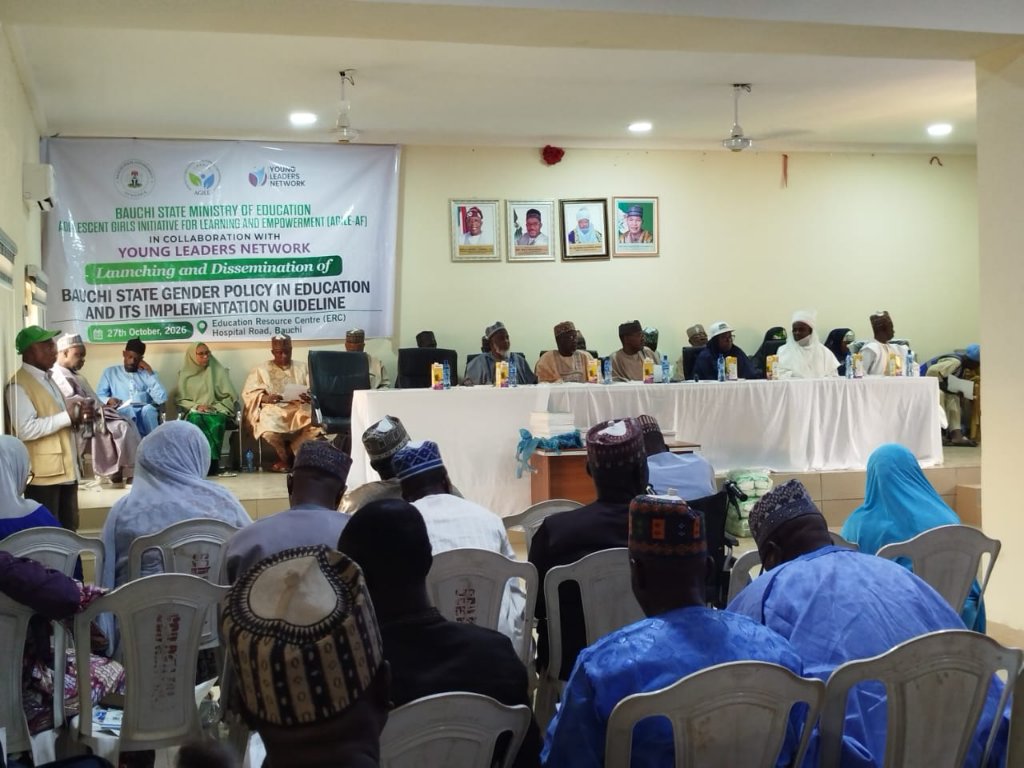
The State Commissioner for Education, Alhaji Abdulkadir Ibrahim, stated this during the official launch and public dissemination of the Bauchi State Gender in Education Policy (2026–2030) and the Guidelines for School Re-entry of Married and Pregnant Adolescent Girls.
The event, held at the Education Resource Centre in Bauchi, was organised in collaboration with the Adolescent Girls Initiative for Learning and Empowerment (AGILE) and the Young Leaders Network.
The Commissioner described the launch as a significant milestone in efforts to build an inclusive education system where every child, regardless of gender, background, disability or personal circumstances, has equal opportunities to enrol, remain in school and complete their education.
He said the policy and re-entry guidelines reflect the government’s commitment to addressing longstanding challenges that prevent children, particularly girls, from achieving their educational aspirations.
Alhaji Abdulkadir Ibrahim commended the Young Leaders Network, Malala Fund, AGILE Project, UNICEF, technical teams and other stakeholders for their contributions to developing the documents.
He also called on traditional and religious leaders, parents and development partners to take ownership of the policies and support their effective implementation.
Earlier, the Bauchi State Project Coordinator of AGILE, Hajiya Ladi Hamma, explained that the policy and guidelines provide a framework for addressing gender disparities in education while promoting equity, inclusion, equal opportunities and the protection of learners.
She said the documents translate policy objectives into practical actions and clearly defined responsibilities for relevant institutions, adding that empowering adolescent girls through education is essential to improving their life chances and promoting social and economic development.
Hajiya Ladi Hamma noted that AGILE interventions are designed to improve girls’ access to secondary education, life-skills development and safe spaces while addressing barriers that hinder their participation in learning.
She urged stakeholders to incorporate the provisions of the policy into annual plans, budgets and school improvement plans.
She also called for the adoption of the school re-entry protocol for married and pregnant adolescent girls, strict enforcement of zero tolerance for gender-based violence, and the provision of menstrual hygiene facilities and safe learning spaces.
The Coordinator further emphasised the need to monitor implementation through disaggregated data on school enrolment, retention, re-entry and completion to measure progress and identify areas requiring further intervention.