Health Experts urge Governments to sustain Child survival programmes.
From the News Desk:
Health experts have called on the Federal and State Governments to take full ownership of child survival programmes in Nigeria to sustain progress made in reducing under-five mortality and prevent the loss of gains recorded so far.
The call was contained in a press statement issued by the SARMAAN Project, titled “Country Ownership: Securing Nigeria’s Child Survival Future.”
According to the statement, signed by the Project’s Lead Investigator, Professor Oliver Ezechi, Nigeria’s under-five mortality rate has declined from 132 to 102 deaths per 1,000 live births.
Despite the improvement, the statement noted that the rate remains more than four times higher than the Sustainable Development Goal target of 25 deaths per 1,000 live births by 2030.
It stressed that most child deaths are preventable, with many occurring at home and beyond the reach of formal healthcare facilities.
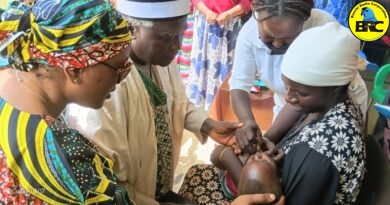
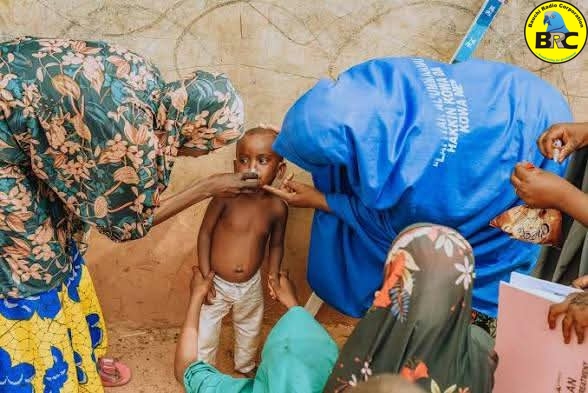
The statement explained that the SARMAAN Project, which provides twice-yearly doses of azithromycin to children aged one to 59 months, reached 16.9 million children across 11 northern states in 2026.
The states include Adamawa, Bauchi, Gombe, Jigawa, Kaduna, Kano, Katsina, Kebbi, Sokoto, Yobe and Zamfara.
It added that since 2024, more than 45.9 million doses have been administered, while over 91,000 community distributors have been trained to support the programme.
The statement also cited evidence from Niger, Mali and Sierra Leone, where similar interventions have recorded positive outcomes. It said child deaths declined by 14 per cent in Niger, while more than 11.6 million treatments were delivered in Mali. In Sierra Leone, deaths within the first 30 days after the initial dose were reportedly reduced by half.
According to the statement, nine states have incorporated the SARMAAN Project into their Annual Operational Plans, with government commitments amounting to 122.9 million naira.
The project therefore called for the formal adoption of the intervention into Nigeria’s Child Survival Action Plan, sustained domestic funding and stronger integration with immunisation, malaria prevention and other child health services.
It reaffirmed that every child has the right to survive, stressing that this can only be guaranteed through a strong, sustainable and nationally owned healthcare system.